
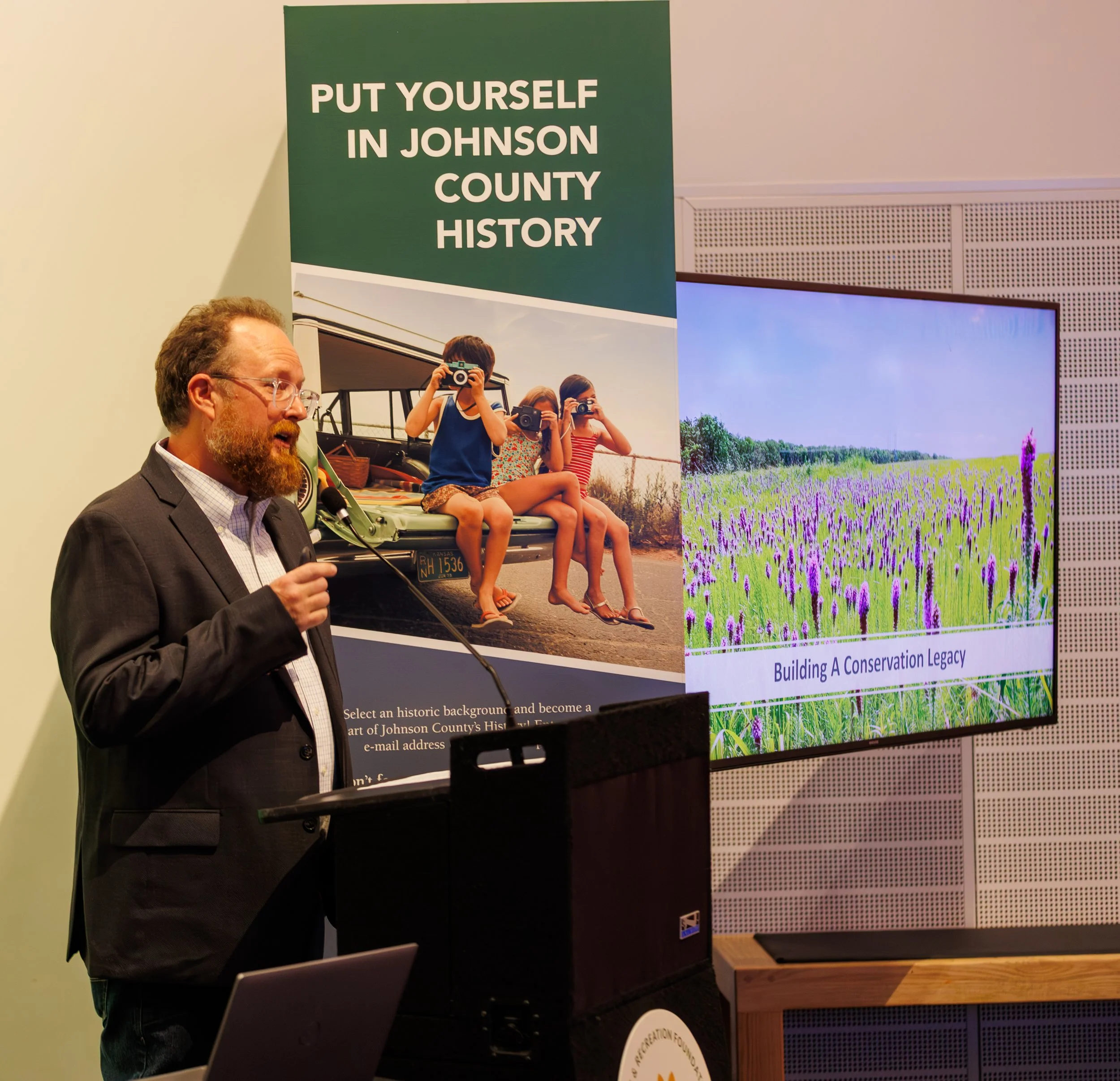
Natural Resources Manager, Matt Garrett, presents plan at Foundation Event on January 8, 2026.
A new JCPRD Natural Resources Plan Update aims to continue the work of the original plan from five years ago, carrying forward its vision and principles while updating key portions such as a priority project list, operational needs, and the development of a new park classification framework.
The update was accepted during the Johnson County Board of Park and Recreation Commissioners’ regular meeting on Nov. 19 and builds on the success of the original JCPRD Natural Resource Plan: A Conservation Framework for a Sustainable Future,” which was adopted in 2019.
“The new restoration workplan is a roadmap of projects reflecting priorities for the next 10 years across many of JCPRD’s properties,” explained Park Planner Will Metcalf, who co-managed the update effort. “The plan sets forth a goal for JCPRD to actively manage over 7,000 acres (nearly three quarters) of its natural areas by 2035 through a combination of staff, private contractors, and volunteers. Roughly 5,000 acres per year are currently under active management, depending on the intensity of work.”
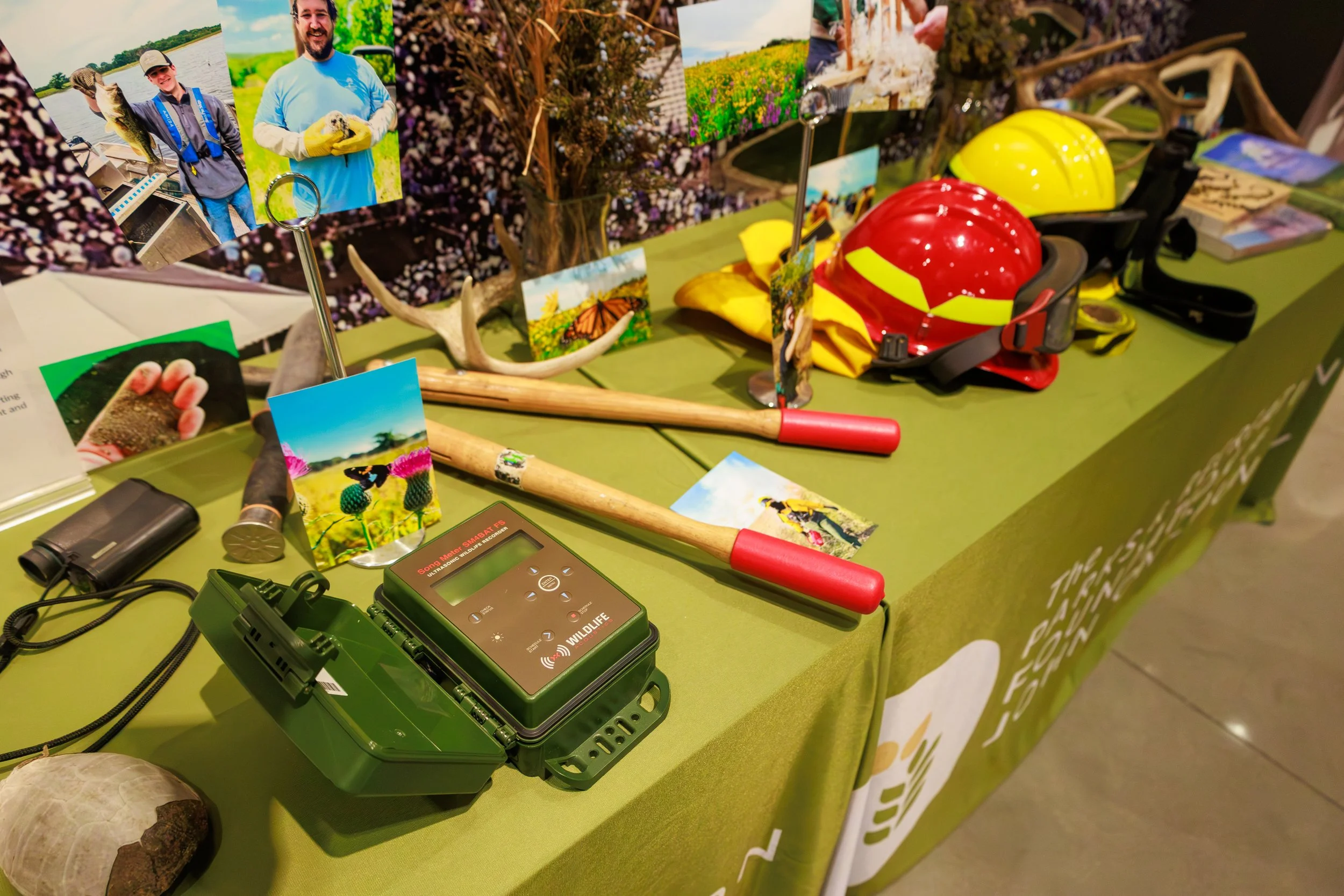
Tools from the field are displayed at Foundation event.
Desired outcomes JCPRD hopes to achieve through the update include: an increase in the number of acres actively managed, improving the quality of natural areas over time, increasing volunteerism and engagement, and continuing high levels of public approval.
As part of the update, JCPRD established a definition of natural areas. The plan defines them as “land and water resources designated for the protection of sensitive ecological resources such as rare or endangered species, to be used for nature-based recreation or activities in accordance with the intended use list at an appropriate intensity.”
Central to the plan update are new natural area guidelines meant to guide park development decisions in a way that ensures current and future generations can enjoy quality natural areas within JCPRD. The guidelines have been used to sort existing JCPRD properties into five overall parkland categories.
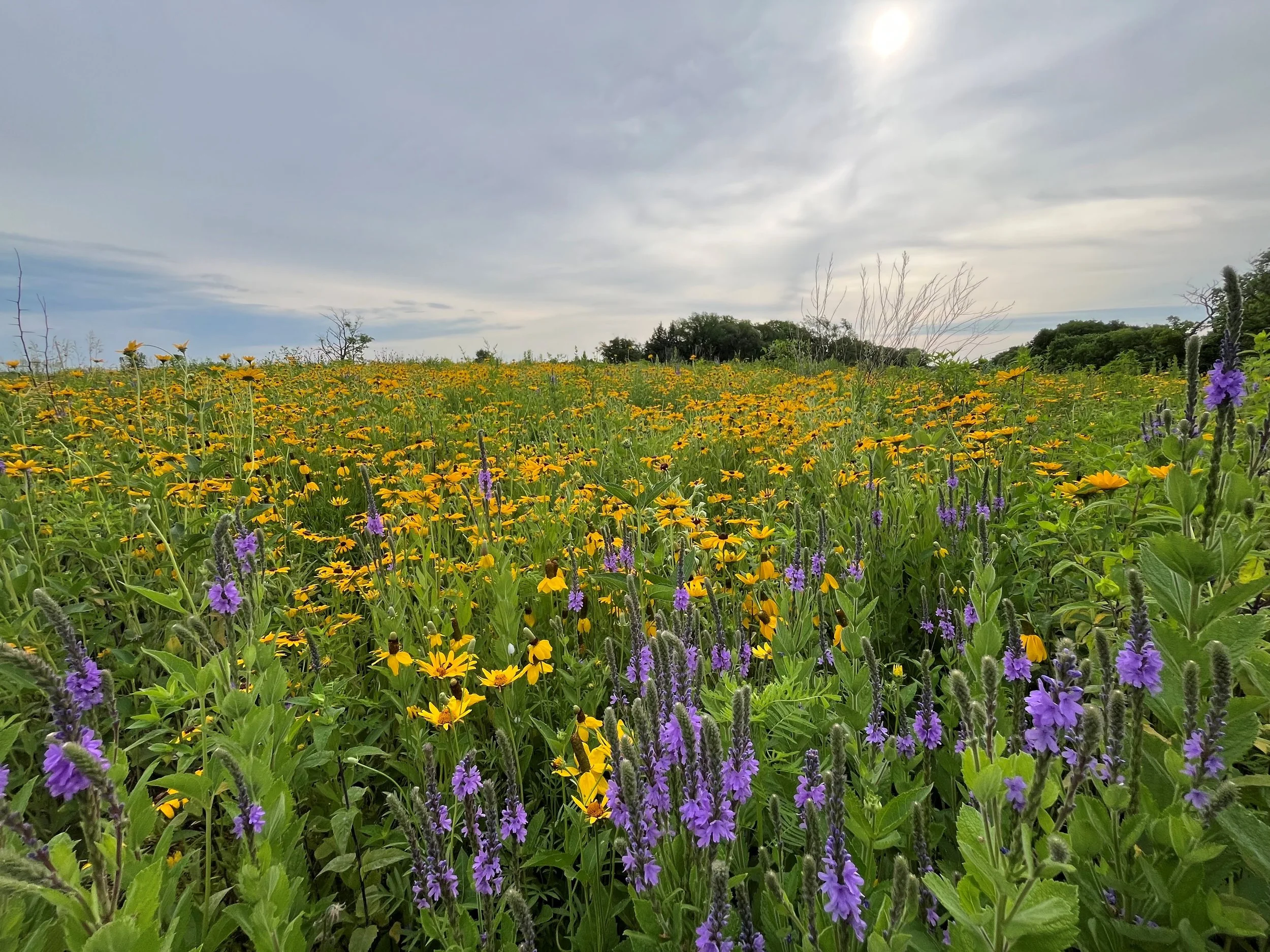
Restored prairie in full bloom at Shawnee Mission Park.
Regional Park Preserves
Streamway Park Preserves
Regional Parks
Community Parks
Special Park & Recreation Areas
“The park classifications provide guidelines that support the master planning process and long-term ecological stewardship,” Metcalf said. “The community may start to see more consistency in terms used by staff and hired consultants to discuss the relationship of natural areas and proposed or planned park development. The classifications will help JCPRD holistically balance numerous community needs while protecting nature and providing high-quality, nature-based experiences. They are another tool to continue working toward a reality where JCPRD visitors 50 years from now can have similar experiences in nature to those today.”
The plan update also includes a ten-year phasing plan for 23 priority management projects over 1,700 acres at 13 JCPRD parks. This will address and restore prairies, wetlands, woodlands, and Savannah ecosystems, as well as removal of invasive species.
Public input is always at the heart of JCPRD’s planning processes. To gather public input, the team conducted an online survey and hosted in-person stations at the Johnson County Arts & Heritage Center and at Ernie Miller Nature Center.
“We received 230 responses, where we saw high levels of support for the park classifications framework (88%) and 91% supported dedicating additional resources to JCPRD’s natural resource efforts,” Metcalf said. “This tracks with data from the 2024 Legacy Plan, where 84% of Johnson County residents indicated environmental stewardship is “very” or “somewhat important” over the next 20 years.”
As a regional leader in natural resource management, the update also included a benchmarking survey to measure where JCPRD stands in relation to four peer organizations across the country. These included: Lake County, Ill.; Kane County, Ill.; Mecklenburg County, N.C.; and Three Rivers Park District, located northwest of Minneapolis, Minn. The survey showed three areas where JCPRD can improve: natural resource budgeting, natural resource staffing, and volunteer hours. Data collected from these communities, as well as local community input, also formed the basis for the park classification system.
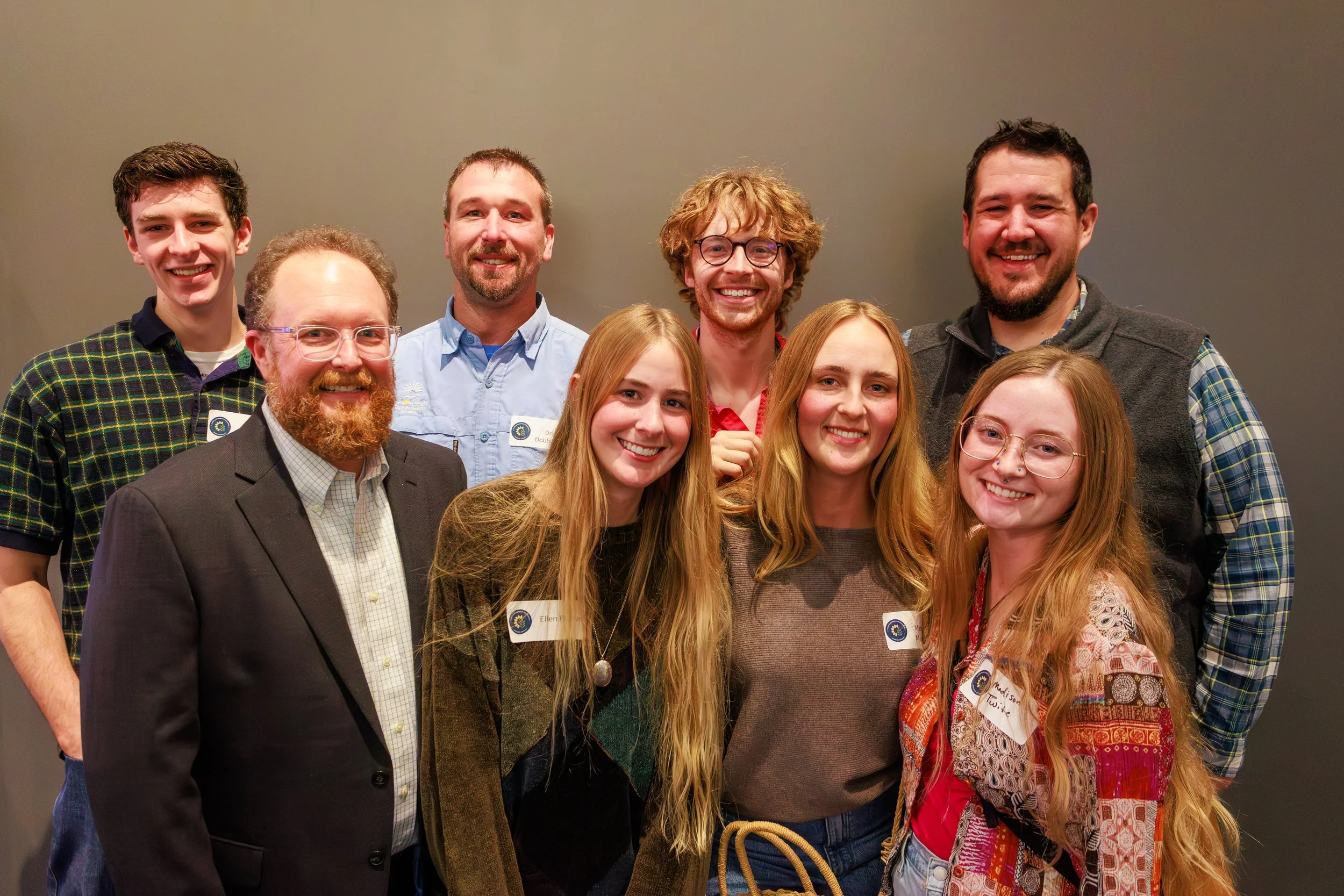
JCPRD’s Natural Resources Team celebrates the new plan at Foundation event.
As the largest landowner in Johnson County, JCPRD currently owns and maintains 10,500 acres (up from about 10,000 in 2019), of which 86% (about 9,200 acres) are natural areas. During the first five years of the original plan implementation, JCPRD collaborated with partners and volunteers to restore, manage, and monitor more than 5,000 acres of prairie and woodland habitats within the park system. Significant work highlights include: 900 acres of prairie planted, 500 acres of non-prairie converted, 1,000 acres of bush honeysuckle removed, and the addition of two full-time and three part-time natural resources staff and equipment to support them.
Other related successes during implementation of the original plan included: partnering with the Kansas Department of Fish and Wildlife for aquatics management at JCPRD properties, hosting two natural resources interns, collaborating with JCPRD’s Culture Division for an Art & Natural Resources Artist Residency, and establishing an innovative deer management program.
“The workplan accounts for maintaining the quality of existing remnants and restorations while expanding the quantity of acres restored,” he said. “To continue doing both, capacity needs to increase accordingly. There’s a team of dedicated people across JCPRD including the Natural Resources Team, park staff, and others who put lots of passion, labor, and expertise into monitoring and stewarding JCPRD’s parkland. Beyond staff, we have an ecosystem of partners including private contractors, educators, volunteers, and nonprofit organizations that help make the work happen. Under current funding levels, the Natural Resources Team has grown and accomplished a lot while operating in a complex picture, but to obtain the future desired outcomes, the plan illustrates more resources will be needed.”
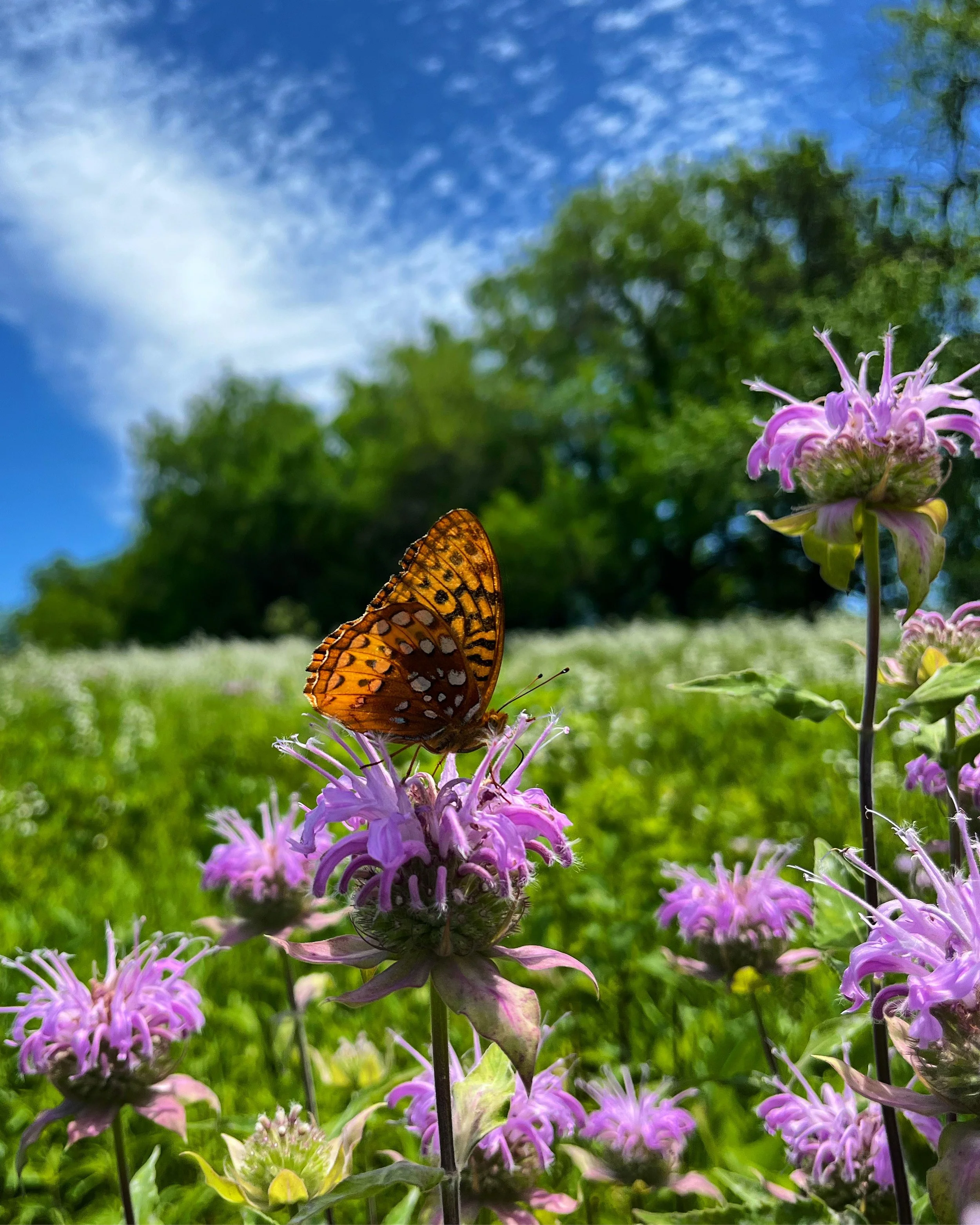
Fritillary butterfly on beebalm.
“This work is challenging and it's expensive,” added The Parks and Recreation Foundation of Johnson County Executive Director Kelly Blandford. “Not to do it really would be much more costly in the end. The foundation chose to prioritize this work in our five-year strategic plan for opportunities to leverage existing funding and partnerships. In the last few years, we've been able to support educational conferences and workshops, help put prairie restoration on the ground, and build the capacity of our small but mighty team with our fantastic internship program.”
The Parks and Recreation Foundation of Johnson County plays a crucial role in the fulfillment of JCPRD’s natural resource efforts, and seeks support for these projects through corporate and private funding. Those interested in supporting this program should contact Blandford by email kelly.blandford@jocogov.org or by phone at 913-826-3448.